Power Screws
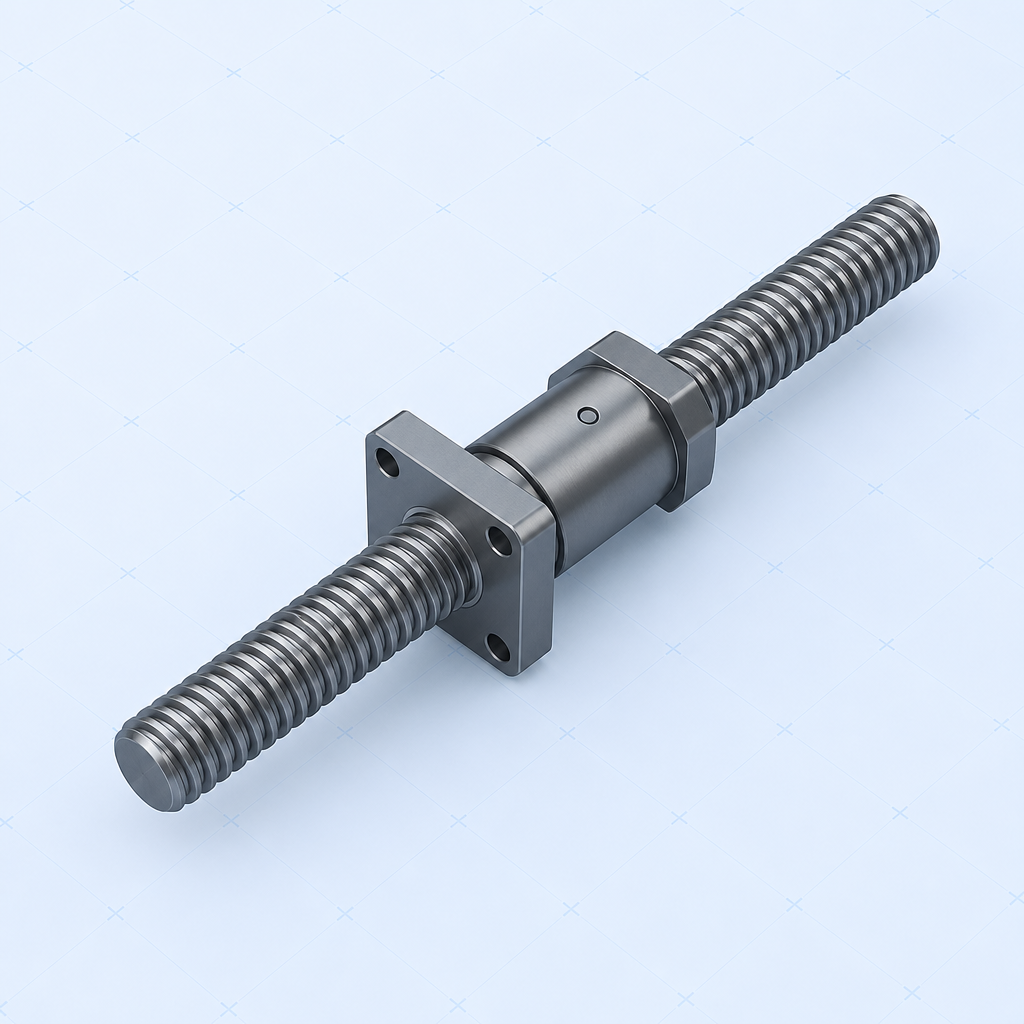
Power screws convert torque to large axial force.
Level
Advanced
Topic tags
Power screws, Machine Design, Vb Bhandari Design
Useful for
GATE favourite, Interview ask
Source
Design of Machine Elements
What you'll learn in this topic
- Square / Acme / buttress threads trade efficiency vs strength and ease of machining
- Self-locking screws hold load without a brake when μ > tan α
- Collar friction often dominates total torque
- Check buckling for long screws in compression
Key Formulas
Important equations & their meanings
Worked Examples
Step-by-step solved problems
- 1.Self-locking check
- 2.Conceptual check — Power Screws
Common Mistakes
Avoid these errors in exams & interviews
- Forgetting collar friction
- Confusing pitch with lead for multi-start screws
- Claiming self-locking without comparing μ and tan α
Practice Questions
Strengthen your concepts with questions
25+
Practice Questions
Interview Questions
Most asked interview problems
13
Interview Questions
GATE Questions
Previous year GATE questions
12
GATE Questions
Applications in real world
Shafts
Power transmission design
Gears
Tooth strength & wear checks
Joints
Bolted and welded connections
Bearings
Life and lubrication selection
Visual concept
Load Case
Stress Check
Factor of Safety
Sized Part
Design size from stress with a clear factor of safety.
Recommended Book
Design of Machine Elements
VB Bhandari
Read: Syllabus unit
Related Topics
What should I learn next?
Nearby topics on your path
University exams
Important Topic
Industry relevance
High
Concept difficulty
Hard
Average time
29 min
See how this topic connects to real mechanical engineering careers
Learn from engineers who use this concept in their daily work.
Introduction
Scope in B.Tech and GATE syllabus
Key relations & formulas
efficiency:
self-locking when μ > tan α (lead angle)
Notation and sign conventions
• — raising load, square thread form
• — square thread idealisation
• — core/body compressive check
Fundamentals and definitions
Governing relations in practice
Assumptions and validity limits
Step-by-step problem approach
2. Draw a neat labelled diagram where applicable — examiners in Indian universities award diagram marks even when arithmetic slips.
3. Identify which relation from this topic applies to power screws.
4. Use equation 1:
5. Use equation 2:
6. Substitute values, compute, and verify units and sign (direction).
7. State conclusion in one line — e.g. safe/unsafe, stable/unstable, feasible/infeasible.
Applications & exam relevance
Common mistakes in exams
• Confusing pitch with lead for multi-start screws
• Claiming self-locking without comparing μ and tan α
• Ignoring buckling on slender screws
Quick revision checklist
2. Self-locking screws hold load without a brake when μ > tan α
3. Collar friction often dominates total torque
4. Check buckling for long screws in compression