Ask about this topic
Answers come from this page's notes only — no live AI, no extra API cost.
Core concept
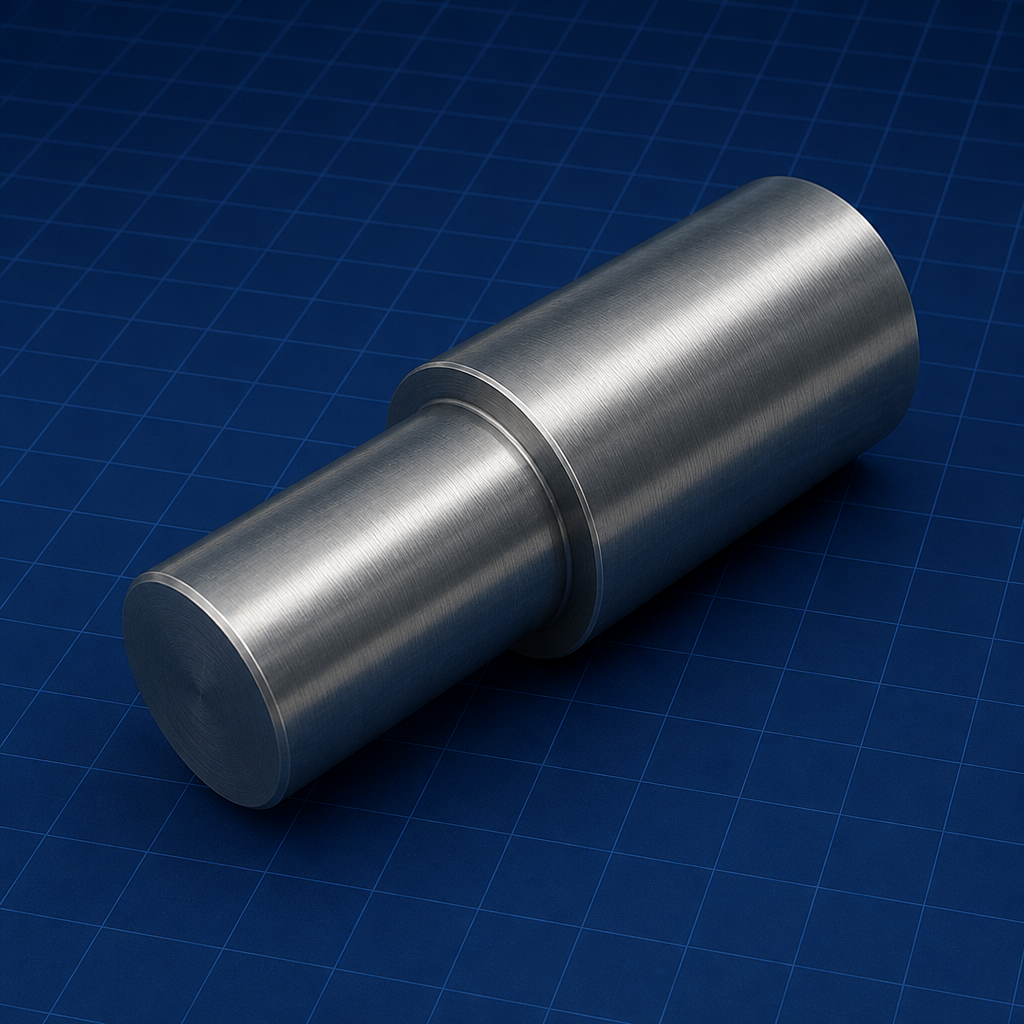
Axial Loading & Thermal Stress
Axial bars deform by (elastic).
31 min15 Interview8 GATEGATEInterview
What you'll learn in this topic
- 1Elastic elongation: ; stiffness .
- 2Series (same ): .
- 3Parallel (same ): .
- 4Free thermal: (no stress if free).
Key Formulas
Important equations & their meanings
Worked Examples
Step-by-step solved problems
- 1Stepped steel bar elongation
- 2Fully fixed bar — thermal stress
- 3Compound bar with temperature rise
Common Mistakes
Avoid these errors in exams & interviews
- Computing σ=Eα T for a **free** bar (stress is zero if free).
- Forgetting α differs between materials in a compound bar.
- Using series formula when materials share the same δ (parallel).
Practice Questions
Strengthen your concepts with questions
23+Practice Questions
Interview Questions
Most asked interview problems
15Interview Questions
GATE Questions
Previous year GATE questions
8GATE Questions
Applications in real world
- BeamsFrames and structural members
- ShaftsTorsion and combined loading
- Pressure vesselsHoop and longitudinal stress
- Machine framesStiffness and strength checks
Visual concept
Problem
Model
Compute
Verify
Model the physics, compute, then verify against limits.
Recommended Book
Strength of MaterialsRK Bansal
Read: Ch. 4–5
University exams
Important Topic
Industry relevance
High
Concept difficulty
Hard
Average time
31 min
Core assumptions (state these in exams)
1. Axial centroidal load — no eccentricity (otherwise bending appears).
2. Linear elastic material; superposition valid.
3. Uniform temperature over the cross-section (or use average ).
4. Plane sections remain plane; stress uniform on section for prismatic bar.
5. Small deformations; support reactions from undeformed geometry.
6. Perfectly rigid supports unless support stiffness is given.
7. Saint-Venant — formulas apply away from local load introduction.
2. Linear elastic material; superposition valid.
3. Uniform temperature over the cross-section (or use average ).
4. Plane sections remain plane; stress uniform on section for prismatic bar.
5. Small deformations; support reactions from undeformed geometry.
6. Perfectly rigid supports unless support stiffness is given.
7. Saint-Venant — formulas apply away from local load introduction.
For tapered circular bars (diameters , ):
Statically indeterminate axial systems
When reactions exceed equilibrium equations alone:
1. Write equilibrium ().
2. Write compatibility of displacements (geometry of supports).
3. Use constitutive relations and .
4. Solve the linear system for redundant forces.
2. Write compatibility of displacements (geometry of supports).
3. Use constitutive relations and .
4. Solve the linear system for redundant forces.
Example: bar fixed at both ends, intermediate axial load at midspan — reactions and relative to fixed ends.
Step-by-step problem approach
1. Sketch geometry, materials, supports, and temperature change.
2. Classify: determinate vs indeterminate; free vs constrained thermal.
3. Find internal force in each segment (equilibrium / FBD).
4. Write .
5. Enforce compatibility (sum of = support movement or zero).
6. Solve for unknowns; back-substitute for stresses .
7. Check signs: heating + restraint → compression; cooling → tension.
8. Units: keep dimensionless; and in same units.
2. Classify: determinate vs indeterminate; free vs constrained thermal.
3. Find internal force in each segment (equilibrium / FBD).
4. Write .
5. Enforce compatibility (sum of = support movement or zero).
6. Solve for unknowns; back-substitute for stresses .
7. Check signs: heating + restraint → compression; cooling → tension.
8. Units: keep dimensionless; and in same units.
Advanced problem-solving framework
Use this sequence for long-form mastery and repeatable scoring:
1. Identify objective, system boundary, and required output.
2. Write all givens in SI units and classify each as measured, assumed, or estimated.
3. Choose the governing model and relation (Elastic elongation:
4. Solve symbolically first to catch structural mistakes early.
5. Substitute values with careful unit tracking.
6. Cross-check by sign, order of magnitude, and limiting case.
7. Write a short engineering conclusion tied to safety, performance, reliability, or cost.
1. Identify objective, system boundary, and required output.
2. Write all givens in SI units and classify each as measured, assumed, or estimated.
3. Choose the governing model and relation (Elastic elongation:
; stiffness
.) with one-line justification.
4. Solve symbolically first to catch structural mistakes early.
5. Substitute values with careful unit tracking.
6. Cross-check by sign, order of magnitude, and limiting case.
7. Write a short engineering conclusion tied to safety, performance, reliability, or cost.
Next, solve one "variant version" of the same problem by changing one assumption (loading type, losses, property constancy, boundary condition, or uncertainty level). This builds transfer ability — essential for difficult exams where numbers and wording are changed deliberately.
Create a reusable answer template in your notes:
Given | Required | Model | Assumptions | Derivation | Substitution | Validation | Conclusion.
Using this structure repeatedly improves speed without reducing depth.
Given | Required | Model | Assumptions | Derivation | Substitution | Validation | Conclusion.
Using this structure repeatedly improves speed without reducing depth.
For viva/interviews, convert your written method into a 45-second explanation format:
"Objective -> model selected -> key assumption -> result -> practical implication."
This makes your answers concise and technically credible.
"Objective -> model selected -> key assumption -> result -> practical implication."
This makes your answers concise and technically credible.
Exam, interview, and note-making strategy
To make this topic genuinely reusable, maintain notes in four blocks: concept summary, assumptions checklist, solved template, and common error-correction logic. This transforms passive reading into active revision material for class tests, semester exams, GATE-style practice, and interviews.
A practical weekly cycle:
- Day 1: read and annotate the topic.
- Day 3: solve one moderate numerical from memory.
- Day 5: give a 60-second oral explanation.
- Day 7: solve one mixed problem integrating this topic with a prerequisite.
- Day 14: do a timed review to test retention.
- Day 1: read and annotate the topic.
- Day 3: solve one moderate numerical from memory.
- Day 5: give a 60-second oral explanation.
- Day 7: solve one mixed problem integrating this topic with a prerequisite.
- Day 14: do a timed review to test retention.
For interview readiness, prepare concise answers to:
1. Where is this used in real engineering?
2. Which assumption is most risky if wrong?
3. How do you sanity-check the result quickly?
4. What trade-off does this result influence?
1. Where is this used in real engineering?
2. Which assumption is most risky if wrong?
3. How do you sanity-check the result quickly?
4. What trade-off does this result influence?
These four questions are asked repeatedly in technical panels, and practicing them creates confidence.
Use this page as a living notebook: append class doubts, lab observations, previous-year tricks, and personal mnemonics. That personalization is what turns a study page into a repeat-visit resource students trust.
Industry scenarios and decision context
Engineering decisions are made under constraints: deadline, budget, material availability, process capability, safety requirements, and maintenance realities. So while solving axial loading & thermal stress, do not treat the answer as "final truth" without context. The numerical output is a decision input, not the decision itself.
Ask these context questions after every solved example:
- If load uncertainty increases, does design margin remain acceptable?
- If manufacturing tolerance drifts, will performance degrade critically?
- If operating temperature/humidity changes, are properties still valid?
- If maintenance is delayed, what failure mode appears first?
- If load uncertainty increases, does design margin remain acceptable?
- If manufacturing tolerance drifts, will performance degrade critically?
- If operating temperature/humidity changes, are properties still valid?
- If maintenance is delayed, what failure mode appears first?
Students who practice contextual questioning develop judgment faster and perform better in internships, design tasks, and technical interviews. This context-first style is a major retention driver because learners see immediate real-world value.
Long-form revision worksheet
Use this worksheet when preparing notes:
A) One-paragraph concept explanation in your own words.
B) Symbol and units table for key variables.
C) Validity limits and assumptions list.
D) One standard solved pattern with all steps.
E) One variant problem where an assumption changes.
F) One industry-use explanation with failure consequence.
G) Three common mistakes and their correction rules.
A) One-paragraph concept explanation in your own words.
B) Symbol and units table for key variables.
C) Validity limits and assumptions list.
D) One standard solved pattern with all steps.
E) One variant problem where an assumption changes.
F) One industry-use explanation with failure consequence.
G) Three common mistakes and their correction rules.
If you can fill all seven blocks without external help, your topic depth is strong enough for repeat use and long retention. If not, revisit the corresponding section and strengthen the missing block.
This structured worksheet approach is intentionally longer than quick revision notes because it is designed for durable mastery. It supports exactly the product goal you mentioned: students should keep coming back because the page is complete enough to build serious notes.
Definition and physical meaning
Axial loading means the resultant internal force is along the centroidal axis of a prismatic (or piecewise prismatic) member — pure tension or compression, no bending/torsion in the elementary model.
Deformation (elastic):
Thermal expansion of an unconstrained bar:
where is the linear coefficient of thermal expansion ( or ).
where is the linear coefficient of thermal expansion ( or ).
If expansion is fully prevented, an equivalent compressive (heating) or tensile (cooling) force develops so that mechanical shortening cancels :
(sign: heating + fixed ends → compression).
(sign: heating + fixed ends → compression).
Physical parameters
Symbol | Meaning | SI unit |
|---|---|---|
Axial force | ||
Cross-section area | ||
Length | ||
Young’s modulus | ||
Thermal expansion coeff. | ||
Temperature change | (or °C) | |
Axial deformation | ||
Axial stress |
Typical : steel , copper , aluminium , concrete –.
Core assumptions (state these in exams)
1. Axial centroidal load — no eccentricity (otherwise bending appears).
2. Linear elastic material; superposition valid.
3. Uniform temperature over the cross-section (or use average ).
4. Plane sections remain plane; stress uniform on section for prismatic bar.
5. Small deformations; support reactions from undeformed geometry.
6. Perfectly rigid supports unless support stiffness is given.
7. Saint-Venant — formulas apply away from local load introduction.
2. Linear elastic material; superposition valid.
3. Uniform temperature over the cross-section (or use average ).
4. Plane sections remain plane; stress uniform on section for prismatic bar.
5. Small deformations; support reactions from undeformed geometry.
6. Perfectly rigid supports unless support stiffness is given.
7. Saint-Venant — formulas apply away from local load introduction.
For tapered circular bars (diameters , ):
Stepped and composite bars
Stepped bar in series (same axial force through each segment if no intermediate loads):
If intermediate axial loads exist, find in each segment from equilibrium (cut sections).
If intermediate axial loads exist, find in each segment from equilibrium (cut sections).
Composite / compound bar (two materials rigidly connected to share load, same length change):
Load shares in proportion to axial rigidity .
Load shares in proportion to axial rigidity .
Equivalent stiffness:
Thermal stress — free, partial, and fixed
Case A — free bar: , .
Case B — fully fixed:
Case C — gap / yielding support: if a gap exists and on heating,
Case D — two materials between rigid walls (e.g. copper rod inside steel tube):
Compatibility: (both net changes equal if ends remain coplanar), plus for pure thermal (no external load).
Compatibility: (both net changes equal if ends remain coplanar), plus for pure thermal (no external load).
External load + temperature: include in equilibrium.
Statically indeterminate axial systems
When reactions exceed equilibrium equations alone:
1. Write equilibrium ().
2. Write compatibility of displacements (geometry of supports).
3. Use constitutive relations and .
4. Solve the linear system for redundant forces.
2. Write compatibility of displacements (geometry of supports).
3. Use constitutive relations and .
4. Solve the linear system for redundant forces.
Example: bar fixed at both ends, intermediate axial load at midspan — reactions and relative to fixed ends.
Fundamentals: self-weight and bar of uniform strength (Bansal Ch. 1)
Elongation due to self-weight for a prismatic bar hanging vertically (density , length , modulus ):
equivalent to a tip load equal to half the bar weight acting on the full length — because stress varies linearly from zero at the free end to maximum at the support.
equivalent to a tip load equal to half the bar weight acting on the full length — because stress varies linearly from zero at the free end to maximum at the support.
Bar of uniform strength under self-weight: cross-section is shaped so that stress is constant along the length (exponential / curved profile in the ideal continuum model). Exam problems usually ask for the idea or compare with a prismatic bar of same end area — state that area increases toward the support.
Uniformly tapering circular rod (end diameters , ), axial :
Tapering rectangular bar (end widths , , thickness ): integrate along the length.
Tapering rectangular bar (end widths , , thickness ): integrate along the length.
Step-by-step problem approach
1. Sketch geometry, materials, supports, and temperature change.
2. Classify: determinate vs indeterminate; free vs constrained thermal.
3. Find internal force in each segment (equilibrium / FBD).
4. Write .
5. Enforce compatibility (sum of = support movement or zero).
6. Solve for unknowns; back-substitute for stresses .
7. Check signs: heating + restraint → compression; cooling → tension.
8. Units: keep dimensionless; and in same units.
2. Classify: determinate vs indeterminate; free vs constrained thermal.
3. Find internal force in each segment (equilibrium / FBD).
4. Write .
5. Enforce compatibility (sum of = support movement or zero).
6. Solve for unknowns; back-substitute for stresses .
7. Check signs: heating + restraint → compression; cooling → tension.
8. Units: keep dimensionless; and in same units.
Common mistakes in exams
• Computing for a free bar (stress is zero if free).
• Forgetting differs between materials in a compound bar.
• Using series formula when materials share the same (parallel).
• Sign errors on (rise vs fall) and on tensile/compressive reactions.
• Mixing mm and m in while using in N/mm² inconsistently.
• Ignoring a specified gap between bar and support.
• Forgetting differs between materials in a compound bar.
• Using series formula when materials share the same (parallel).
• Sign errors on (rise vs fall) and on tensile/compressive reactions.
• Mixing mm and m in while using in N/mm² inconsistently.
• Ignoring a specified gap between bar and support.
Detailed conceptual understanding
Axial Loading & Thermal Stress should be studied as a complete reasoning chain: definition, governing assumptions, physical interpretation, boundary conditions, and limits of validity. In som, strong students do not stop at "what is the formula"; they explain why the model applies, which simplifications are being used, and what error appears when those simplifications break. This is the key difference between memorized learning and engineering understanding.
A high-quality conceptual pass should answer these questions in writing:
1. Which quantity is being predicted or controlled?
2. Which variables dominate sensitivity and why?
3. Which assumptions are explicit, and which are hidden?
4. What real-world effects are neglected in first-pass analysis?
5. Which engineering decision depends on this output?
1. Which quantity is being predicted or controlled?
2. Which variables dominate sensitivity and why?
3. Which assumptions are explicit, and which are hidden?
4. What real-world effects are neglected in first-pass analysis?
5. Which engineering decision depends on this output?
When revising, rewrite the concept in your own words and attach one real scenario from lab, workshop, project, internship, or industry case. This habit transforms abstract theory into retrievable memory. If a topic cannot be explained without reading the page, it is not yet mastered.
Use this page as a note source: create a "concept map" with cause-effect arrows and keep updating it whenever you solve new problems. Students who maintain evolving concept maps typically retain topics longer and return less to emergency cramming.
Advanced problem-solving framework
Use this sequence for long-form mastery and repeatable scoring:
1. Identify objective, system boundary, and required output.
2. Write all givens in SI units and classify each as measured, assumed, or estimated.
3. Choose the governing model and relation (Elastic elongation:
4. Solve symbolically first to catch structural mistakes early.
5. Substitute values with careful unit tracking.
6. Cross-check by sign, order of magnitude, and limiting case.
7. Write a short engineering conclusion tied to safety, performance, reliability, or cost.
1. Identify objective, system boundary, and required output.
2. Write all givens in SI units and classify each as measured, assumed, or estimated.
3. Choose the governing model and relation (Elastic elongation:
; stiffness
.) with one-line justification.
4. Solve symbolically first to catch structural mistakes early.
5. Substitute values with careful unit tracking.
6. Cross-check by sign, order of magnitude, and limiting case.
7. Write a short engineering conclusion tied to safety, performance, reliability, or cost.
Next, solve one "variant version" of the same problem by changing one assumption (loading type, losses, property constancy, boundary condition, or uncertainty level). This builds transfer ability — essential for difficult exams where numbers and wording are changed deliberately.
Create a reusable answer template in your notes:
Given | Required | Model | Assumptions | Derivation | Substitution | Validation | Conclusion.
Using this structure repeatedly improves speed without reducing depth.
Given | Required | Model | Assumptions | Derivation | Substitution | Validation | Conclusion.
Using this structure repeatedly improves speed without reducing depth.
For viva/interviews, convert your written method into a 45-second explanation format:
"Objective -> model selected -> key assumption -> result -> practical implication."
This makes your answers concise and technically credible.
"Objective -> model selected -> key assumption -> result -> practical implication."
This makes your answers concise and technically credible.
Exam, interview, and note-making strategy
To make this topic genuinely reusable, maintain notes in four blocks: concept summary, assumptions checklist, solved template, and common error-correction logic. This transforms passive reading into active revision material for class tests, semester exams, GATE-style practice, and interviews.
A practical weekly cycle:
- Day 1: read and annotate the topic.
- Day 3: solve one moderate numerical from memory.
- Day 5: give a 60-second oral explanation.
- Day 7: solve one mixed problem integrating this topic with a prerequisite.
- Day 14: do a timed review to test retention.
- Day 1: read and annotate the topic.
- Day 3: solve one moderate numerical from memory.
- Day 5: give a 60-second oral explanation.
- Day 7: solve one mixed problem integrating this topic with a prerequisite.
- Day 14: do a timed review to test retention.
For interview readiness, prepare concise answers to:
1. Where is this used in real engineering?
2. Which assumption is most risky if wrong?
3. How do you sanity-check the result quickly?
4. What trade-off does this result influence?
1. Where is this used in real engineering?
2. Which assumption is most risky if wrong?
3. How do you sanity-check the result quickly?
4. What trade-off does this result influence?
These four questions are asked repeatedly in technical panels, and practicing them creates confidence.
Use this page as a living notebook: append class doubts, lab observations, previous-year tricks, and personal mnemonics. That personalization is what turns a study page into a repeat-visit resource students trust.
Industry scenarios and decision context
Engineering decisions are made under constraints: deadline, budget, material availability, process capability, safety requirements, and maintenance realities. So while solving axial loading & thermal stress, do not treat the answer as "final truth" without context. The numerical output is a decision input, not the decision itself.
Ask these context questions after every solved example:
- If load uncertainty increases, does design margin remain acceptable?
- If manufacturing tolerance drifts, will performance degrade critically?
- If operating temperature/humidity changes, are properties still valid?
- If maintenance is delayed, what failure mode appears first?
- If load uncertainty increases, does design margin remain acceptable?
- If manufacturing tolerance drifts, will performance degrade critically?
- If operating temperature/humidity changes, are properties still valid?
- If maintenance is delayed, what failure mode appears first?
Students who practice contextual questioning develop judgment faster and perform better in internships, design tasks, and technical interviews. This context-first style is a major retention driver because learners see immediate real-world value.
Common misconceptions and correction patterns
Most weak performance comes from repeated misconception patterns, not from lack of intelligence. Typical patterns include unit inconsistency, wrong model selection, assumption mismatch, and skipping interpretation after substitution.
Correction pattern to practice:
1. Detect: identify exactly where logic diverged.
2. Diagnose: state why that step is invalid.
3. Repair: rewrite with correct model/assumption.
4. Verify: run a sanity check and compare trends.
1. Detect: identify exactly where logic diverged.
2. Diagnose: state why that step is invalid.
3. Repair: rewrite with correct model/assumption.
4. Verify: run a sanity check and compare trends.
Maintain a personal "mistake log" with three columns: mistake, reason, correction rule. Reviewing this log before exams has a larger performance impact than reading new theory repeatedly.
Use the same correction discipline in interviews: acknowledge the slip, state corrected logic, and proceed. This demonstrates professional maturity and keeps the discussion positive even when you initially miss a step.
Long-form revision worksheet
Use this worksheet when preparing notes:
A) One-paragraph concept explanation in your own words.
B) Symbol and units table for key variables.
C) Validity limits and assumptions list.
D) One standard solved pattern with all steps.
E) One variant problem where an assumption changes.
F) One industry-use explanation with failure consequence.
G) Three common mistakes and their correction rules.
A) One-paragraph concept explanation in your own words.
B) Symbol and units table for key variables.
C) Validity limits and assumptions list.
D) One standard solved pattern with all steps.
E) One variant problem where an assumption changes.
F) One industry-use explanation with failure consequence.
G) Three common mistakes and their correction rules.
If you can fill all seven blocks without external help, your topic depth is strong enough for repeat use and long retention. If not, revisit the corresponding section and strengthen the missing block.
This structured worksheet approach is intentionally longer than quick revision notes because it is designed for durable mastery. It supports exactly the product goal you mentioned: students should keep coming back because the page is complete enough to build serious notes.